Roofing guide
EPDM vs GRP Flat Roofs
If your flat roof needs replacing, the two systems you will hear about most are EPDM rubber and GRP fibreglass. Both are modern, well-proven options that have largely replaced old-style felt on homes across the UK. Neither is better in every situation, so this guide explains how they differ and which tends to suit different parts of a house.
What EPDM and GRP Roofs Are Made Of
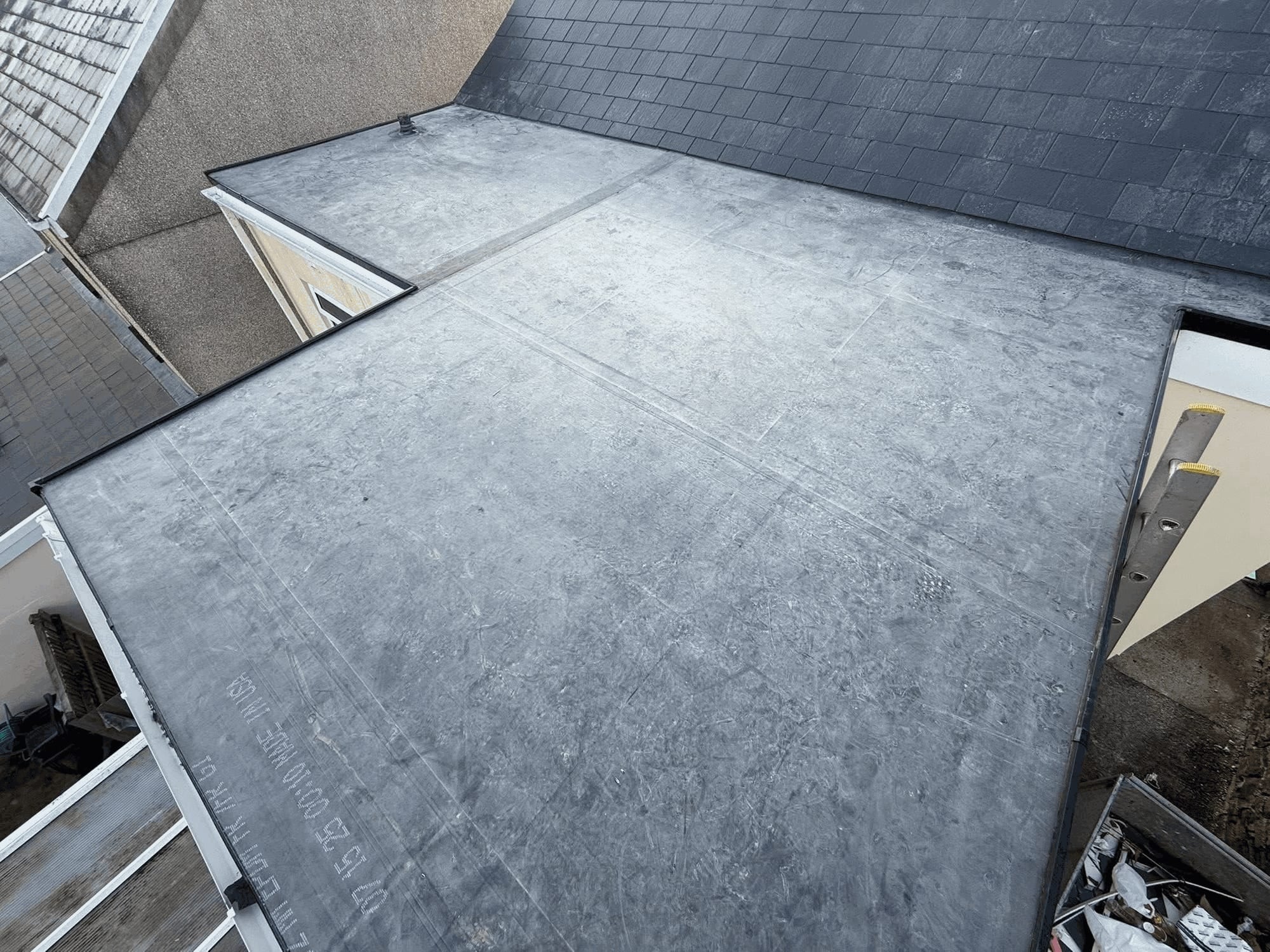
EPDM is a synthetic rubber membrane. On most domestic roofs it is supplied as a single sheet cut to the size of the roof, so there are few or no joins across the main area. It is flexible, stretches with the building as temperatures change and copes well with the British weather.
GRP stands for glass reinforced plastic, often just called fibreglass. Rather than arriving as a finished sheet, it is built up on the roof: a glass fibre mat is laid onto a timber deck and soaked with resin, then finished with a coloured topcoat once it has cured. The result is a hard, seamless surface that is bonded to the deck beneath.
How Each System Is Installed
Both systems depend on a sound, dry deck, so a good installer will check the timbers and boards first and replace anything soft or rotten. Getting the falls right matters too, so rainwater drains towards the gutter rather than sitting in puddles.
An EPDM membrane is bonded to the deck with adhesive, and the edges are finished with trims and upstands where the roof meets walls. Because it is a cold-applied system with no naked flames, it can be fitted quickly and cleanly in most weather that is dry enough to bond.
GRP needs dry conditions and suitable temperatures for the resin to cure properly, so installation is more weather-dependent. Trims, corners and upstands are formed in the same material, which gives a very tidy, continuous finish once it is complete.
Appearance, Durability and Lifespan
EPDM has a matt black finish that looks clean and understated, and it sits low and flat on the roof. GRP has a smooth, slightly glossy finish and the topcoat can be supplied in a range of colours, which some people prefer where the roof is overlooked from upstairs windows.
When properly installed and looked after, both systems are generally long-lasting. EPDM is often expected to last several decades, and a well-laid GRP roof typically offers a similar sort of life. In practice, the quality of the installation, the condition of the deck and how well the roof drains make more difference than the choice of material alone.
- EPDM: flexible, few joins, quick and clean to fit, matt black finish
- GRP: rigid, seamless, forms neat detailed edges, choice of topcoat colours
- Both: depend on a sound deck, good falls and careful detailing at walls and outlets
Repairs and Which Roof Suits Where
Small cuts or punctures in EPDM can usually be patched with a compatible repair kit, and the membrane can be lifted locally if needed. GRP can also be repaired by cutting out the damaged area and laminating new matting and resin over it, though matching the colour of an older topcoat exactly is not always possible.
As a rough guide, EPDM is a popular choice for larger, simple roofs where a single sheet covers the whole area, while GRP is often favoured where there are lots of corners, upstands or details to form, or where people will walk on the surface regularly.
- Garages and outbuildings: EPDM is commonly used as a simple, practical covering
- Kitchen and rear extensions: either works well; EPDM suits large plain areas, GRP suits complex shapes and rooflights
- Dormers: both are used; access and the amount of detailing often decide it
- Balconies and roofs with foot traffic: GRP is often preferred for its hard, walkable surface, sometimes with a non-slip finish
Questions to Ask Before You Choose
Whichever system you are offered, a few simple questions will help you compare quotes fairly and avoid surprises later.
- Will the existing deck be checked, and replaced where needed?
- Will insulation be added or upgraded as part of the work?
- How will the roof drain, and will the falls be improved if water currently ponds?
- How will the edges, walls and any rooflights be detailed?
- Is the system manufacturer-approved for the way it is being installed?
When to Call a Roofer About Your Flat Roof
If your flat roof is leaking, blistering, holding water or simply getting old, it is worth having it looked at before damp reaches the timbers below. Our roofers can inspect the roof, explain whether EPDM or GRP makes more sense for your property and give you a free, no-obligation quote. You can find out more about the work we do on our flat roofing page.
From first call to finished roof
Let’s Take a Look
at Your Roof
Tell us what you need and where your property is. We’ll help you understand the next step.
- 1
Tell Us about the Job
Call or use the form to describe your roof and the work you have in mind.
- 2
Arrange a Visit
We assess the roof, discuss the options and answer your questions.
- 3
Receive Your Free Quote
Understand the proposed work and costs before deciding to go ahead.
No-obligation enquiry