Roofing guide
Replacing Fascias, Soffits and Guttering
The boards and gutters along the edge of your roof are easy to overlook until something goes wrong. Yet together they protect the roof timbers, ventilate the loft and carry rainwater safely away from your walls. This guide explains what each part does, the signs it is time for replacement and the choices you will need to make.
What Fascias, Soffits and Guttering Do
Together these parts are often called the roofline. Each one has a specific job, and when one fails it usually puts extra strain on the others.
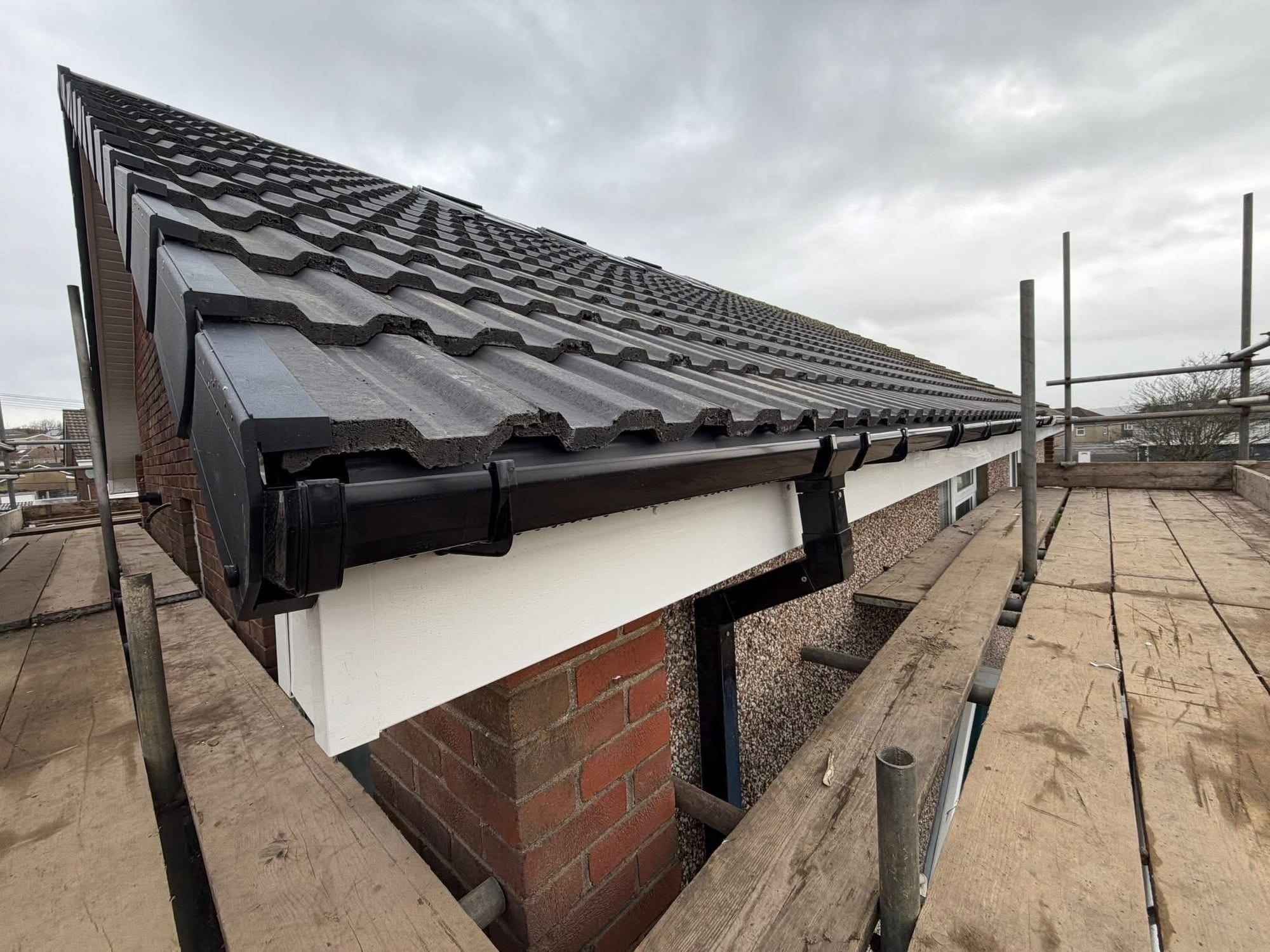
- Fascias: the long boards fixed to the ends of the rafters. They support the bottom row of tiles or slates and carry the weight of the guttering.
- Soffits: the boards underneath the overhang, closing the gap between the fascia and the wall. Many include vents to help air move through the loft.
- Guttering and downpipes: collect rainwater from the roof and direct it to the drains, keeping it off your walls and foundations.
Signs Your Roofline Needs Replacing
Some problems can be fixed with cleaning or a small repair, but the following signs usually mean the roofline is reaching the end of its life or the timber behind it has been affected.
- Rotten, soft or split timber fascias and soffits
- Paint that keeps peeling or flaking soon after redecorating
- Gutters that sag, pull away from the fascia or slope the wrong way
- Gutters overflowing in heavy rain even when they have been cleared
- Dripping or leaking joints and cracked sections
- Damp patches, green staining or algae on the walls below
- Birds, wasps or other pests getting into the roof through gaps
uPVC vs Timber Fascias and Soffits
Timber was the traditional choice and still suits some period and listed properties, where keeping the original character matters. It needs regular painting and maintenance, though, and once water gets in it can rot quite quickly.
Most homeowners now choose uPVC. It does not rot, does not need painting and only needs an occasional wipe down to keep it looking clean. It comes in white, black, brown and a range of woodgrain and coloured finishes, so it can be matched to windows and doors. Gutters are commonly uPVC too, with options such as cast iron or aluminium for homes where a heritage look is wanted.
Cap-Over Boards vs Full Replacement
A cap-over, sometimes called cladding, fits thin uPVC boards over the existing timber. It is quicker and less disruptive, but it is only suitable when the timber underneath is genuinely sound. Covering rotten wood hides the problem rather than solving it, and the decay can continue out of sight.
A full replacement removes the old boards completely, allowing the rafter ends to be inspected and repaired before new fascias and soffits go up. It is usually the more reliable long-term option, and it gives the chance to add proper ventilation and an eaves protection system so the underlay drains neatly into the gutter.
Why Replace the Roofline With a Reroof
If your roof is due for replacement, it often makes sense to renew the fascias, soffits and gutters at the same time. Scaffolding is already in place, the bottom courses of the roof are already off, and the new roofline can be fitted to suit the new covering exactly.
It is also a good moment to consider dry verge and dry ridge systems. These replace the mortar along the gable edges and ridge with mechanically fixed caps, so there is no mortar to crack and fall out over time. Done together, the whole roof and roofline are finished in one job rather than two.
When to Call a Roofer About Your Roofline
If you have spotted rot, leaking gutters or damp patches on your walls, it is worth getting the roofline looked at before the problem reaches the roof timbers or brickwork. Our roofers can check the condition of your fascias, soffits and guttering, explain whether a cap-over or full replacement is right and provide a free quote. You can read more on our fascias, soffits and guttering page.
From first call to finished roof
Let’s Take a Look
at Your Roof
Tell us what you need and where your property is. We’ll help you understand the next step.
- 1
Tell Us about the Job
Call or use the form to describe your roof and the work you have in mind.
- 2
Arrange a Visit
We assess the roof, discuss the options and answer your questions.
- 3
Receive Your Free Quote
Understand the proposed work and costs before deciding to go ahead.
No-obligation enquiry