Roofing guide
Signs You Need a New Roof
Most roofs give plenty of warning before they fail completely. Knowing what to look for, both from the ground and inside the loft, helps you deal with small problems early and recognise when patching is no longer the sensible option. Here are the main signs to watch for and how to think about repair versus replacement.
Slipped, Cracked or Missing Slates and Tiles
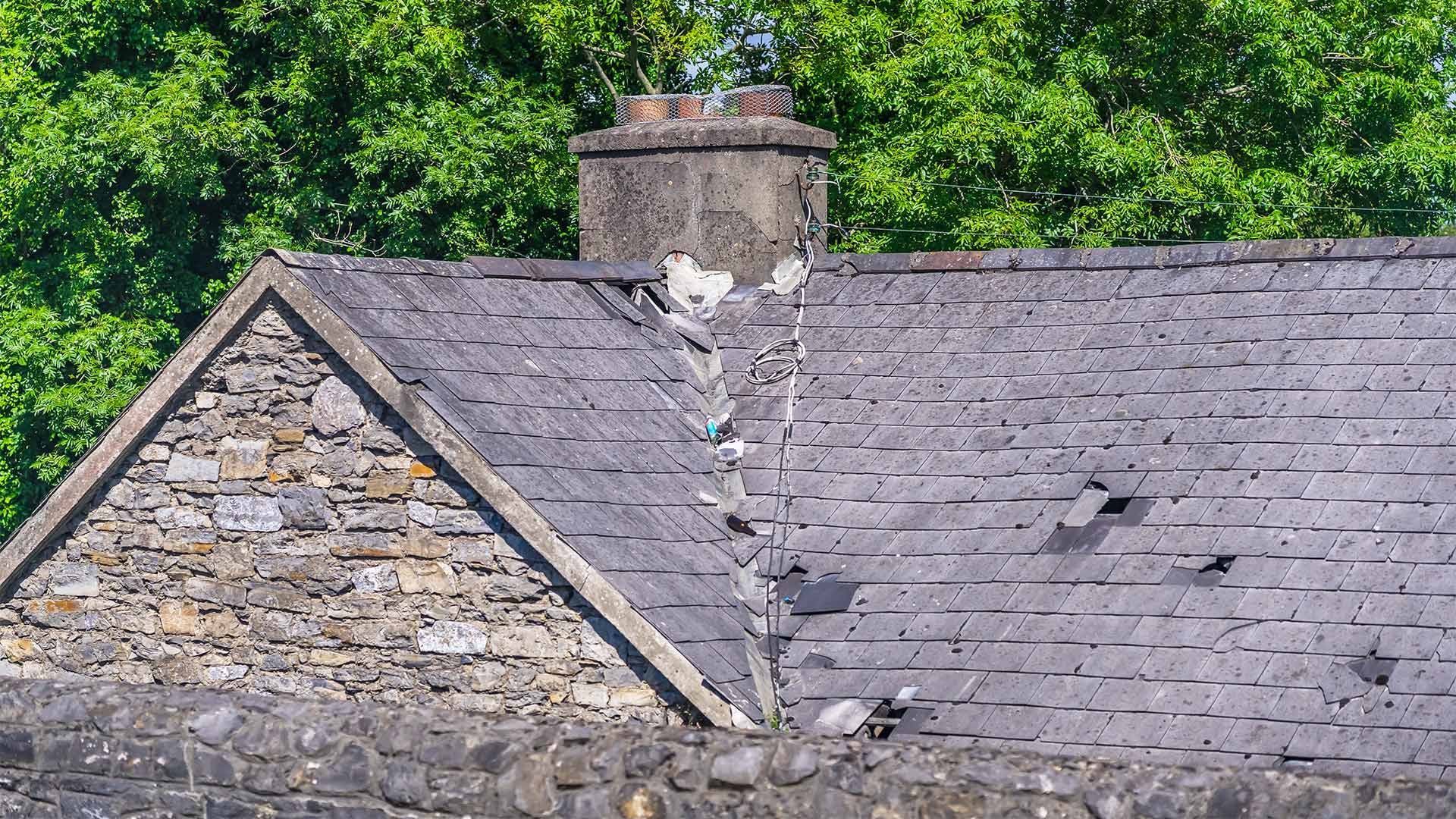
A single slipped slate after a storm is usually a straightforward repair. The picture changes when slates or tiles are slipping in several places, or keep moving after they have been refixed. On older slate roofs this is often caused by nail fatigue, where the original fixings have corroded and can no longer hold the slates in place.
Cracked, flaking or delaminating slates and crumbling, porous tiles are also signs that the covering itself is wearing out rather than suffering one-off damage.
- Slates or tiles sliding down the roof or lying in the gutter
- Gaps where a slate or tile used to be
- Lead or copper clips (tingles) holding many slates in place from earlier repairs
- Flaking, crumbling or visibly cracked slates and tiles
Leaks, Damp Stains and Daylight in the Loft
Your loft is the best place to see how the roof is really doing. Take a torch on a dry day and again after heavy rain if you can do so safely.
Water stains on the rafters or underside of the roof, damp or mouldy insulation, and brown marks on bedroom ceilings all point to water getting in. If you can see daylight through the roof, there are gaps that rain and wind can also get through. Older roofs without a modern breathable membrane are especially prone to this as the covering ages.
- Damp, dark or stained timbers and boards
- Wet or compressed loft insulation
- Pinpoints or strips of daylight through the roof
- Torn, brittle or sagging underlay
- Water marks on upstairs ceilings or around the chimney breast
Sagging, Moss and Failing Ridge Mortar
Look along the roof line from the street. A ridge or roof slope that dips, bows or looks uneven can indicate weakened timbers, overloading or long-term water damage. Sagging is a structural issue and should always be checked by a roofer promptly.
Moss on its own is mostly cosmetic, but heavy growth holds moisture against the roof, can lift tiles and blocks gutters. Ridge and hip tiles bedded in mortar also need attention over time: cracked or missing mortar lets water in and can leave ridge tiles loose, which is a safety risk in high winds.
Age of the Roof and Repeated Repairs
Every roof covering has a natural lifespan. Concrete tiles typically last several decades, while good natural slate can last much longer, although the nails, battens and underlay beneath it often wear out first. If your roof is original to an older house and you do not know when it was last replaced, it is worth having it assessed.
One of the clearest signs is the repair history. If you are calling someone out every winter for a different leak, the roof is telling you that it is reaching the end of its working life. Money spent on repeated patching may be better put towards a long-term solution.
Should You Repair or Replace Your Roof?
A repair usually makes sense when the damage is localised and the rest of the roof is in good condition. A full or partial reroof becomes the better option when problems are widespread or the components underneath the covering have failed.
- Repair: a few slipped or broken slates, a storm-damaged area, a single flashing or ridge issue
- Repair: a recent roof with an isolated problem
- Replace: widespread slipping caused by nail fatigue
- Replace: rotten battens, failed underlay or damp timbers across the roof
- Replace: sagging, or leaks returning in different places despite repairs
When to Call a Roofer for an Assessment
If you have noticed any of these signs, it is better to get the roof checked sooner rather than later, as water damage tends to spread quietly. Our roofers will inspect the roof, show you what we find and give honest advice on whether a repair will do the job or a new roof is the better investment, along with a free quote. Our new roofs and reroofing page explains more about the work involved.
From first call to finished roof
Let’s Take a Look
at Your Roof
Tell us what you need and where your property is. We’ll help you understand the next step.
- 1
Tell Us about the Job
Call or use the form to describe your roof and the work you have in mind.
- 2
Arrange a Visit
We assess the roof, discuss the options and answer your questions.
- 3
Receive Your Free Quote
Understand the proposed work and costs before deciding to go ahead.
No-obligation enquiry